Welcome to Fu 'an Darong Auto Parts Industry Co., Ltd.

What is the working principle of the intake system? The intake system modification expert will introduce it to you!
Author:
Release time:
2022-12-23
Introduction by intake system modification experts: The modern automotive intake system mainly consists of variable intake systems, which are primarily divided into VVT (Variable Valve Timing), CVVT (Continuously Variable Valve Timing), VVT-i (Electronic Variable Timing), and i-VTEC (Electronic Variable Valve Lift). The components that guide air or mixed gas into the engine cylinders are collectively referred to as the engine intake system.
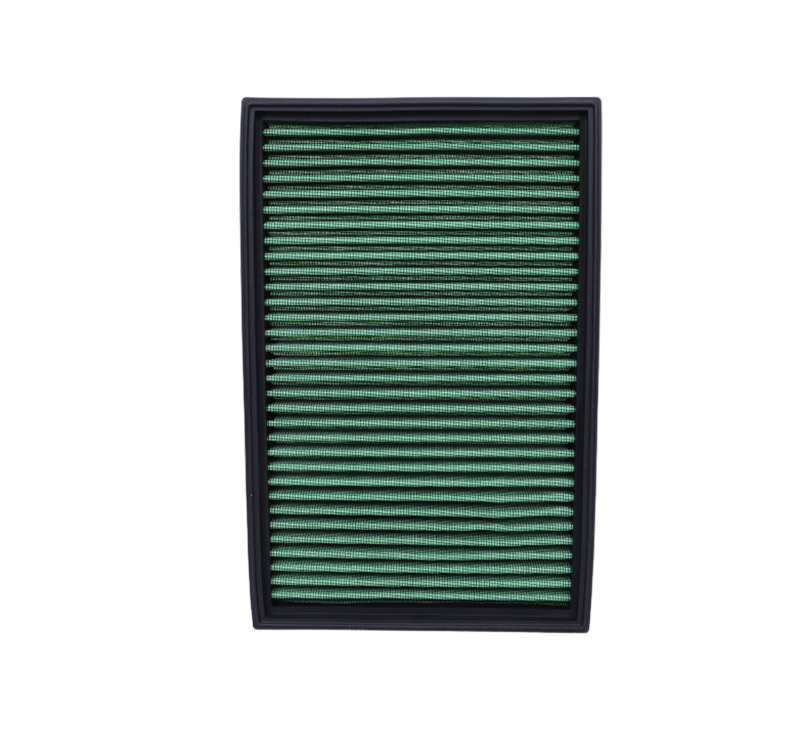
What is the working principle of the intake system? Intake system modification experts will introduce it to you!
When the engine is running, the driver controls the throttle opening through the accelerator pedal to change the intake volume and control the engine's operation. The air entering the engine is filtered through the air filter to remove dust and other impurities, then flows through the air flow meter, enters the power chamber along the throttle passage, and is distributed to each cylinder via the intake manifold; when the engine is idling in cold conditions, some air bypasses the throttle into the cylinder through the auxiliary air valve or idle control valve.
What is the volumetric efficiency of the intake system? Intake system modification experts will introduce it to you!
The amount of air that can be obtained in each cycle system is a fundamental economic factor determining the power output of the engine, and the engine's intake capacity is measured by the engine's "volumetric efficiency." The definition of 'volumetric efficiency' is the ratio of the volume of air inhaled by the cylinder during each intake stroke to the volume of the cylinder's working piston movement under the atmospheric pressure in our country. The reason for using the volume of inhaled air under the atmospheric pressure in our country as a standard is that when air enters a cylinder, the pressure inside the cylinder is lower than the external atmospheric pollution pressure, and the working pressure value will change. Therefore, the volume issue under 1 atmosphere is used as a common standard for enterprises. Additionally, during the intake stroke, various intake resistances are encountered, and due to the high temperature effects in the intake duct and cylinder, the volume of air inhaled into the cylinder, when converted to a state under one atmosphere, will definitely be less than the volume of the cylinder. This means that the volumetric efficiency of naturally aspirated engines is always less than 1. Reducing intake resistance, increasing the working pressure inside the cylinder, lowering temperature, reducing exhaust back pressure, and continuously increasing the intake valve area can all improve the volumetric efficiency of automotive engines, while the volumetric efficiency will decrease when the engine operates at high speeds.
What is the filling efficiency of the intake system? Intake system modification experts will introduce it to you!
Due to the density of ambient air being influenced by the atmospheric conditions (temperature, pressure) at the main entrance of the intake system, the volumetric efficiency issue cannot reflect the actual quality of air entering the cylinder. It needs to be explained by filling efficiency. The filling efficiency of the intake system refers to the ratio of the environmental quality of air inhaled during each intake stroke to the dry air product quality occupying the volume of a cylinder that drives the piston movement under standard working conditions (1 atmosphere, 20°C, density of 1.187kg/m²). When atmospheric pressure is high, temperature is low, and density is high, the engine's filling efficiency will also increase. Thus, it can be seen that the volumetric efficiency reflects the differences in engine system performance caused by the engine's structure and operating conditions, while the filling efficiency reflects the changes in engine performance caused by the atmospheric conditions at the time of operation.
What is the manifold efficiency of the intake system? Intake system modification experts will introduce it to you!
Another important economic factor affecting the working volumetric efficiency is the length of the intake manifold, which also leads to two social effects related to volumetric calculation efficiency: 'pulsation' and 'inertia'.


RELATED NEWS
2023/08/08
2023/07/31
2023/07/19