Welcome to Fu 'an Darong Auto Parts Industry Co., Ltd.

Maintenance and Cleaning of the Car Air Intake System
Author:
Release time:
2023-03-02
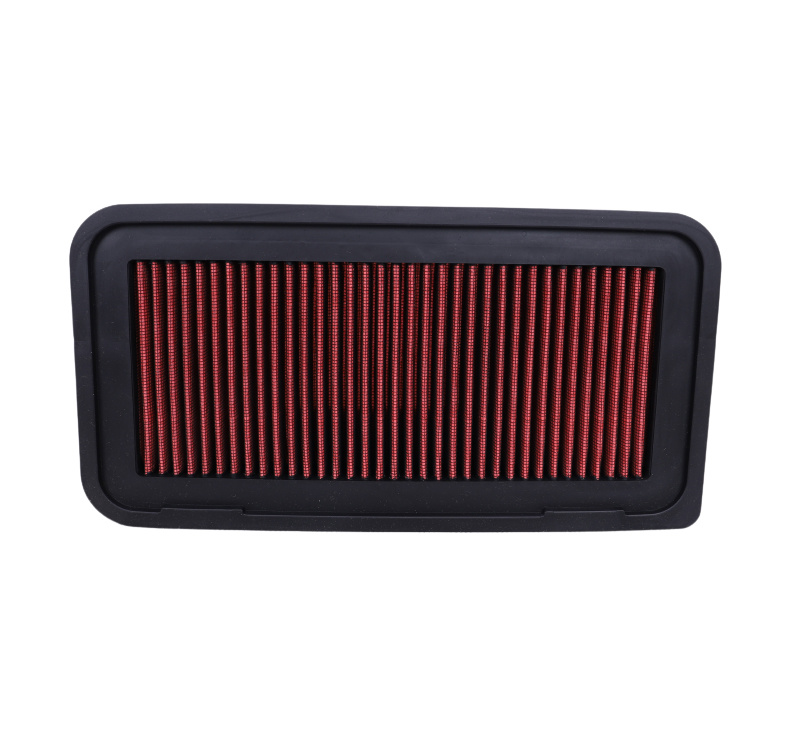
The automobile intake system consists of an air filter, air flow meter, intake pressure sensor, throttle body, additional air valve, idle control valve, resonator, drive cavity, intake manifold, etc. The important function of the intake system is to transport clean, dry, and relatively stable gas to meet the needs of the engine, preventing debris and coarse particulate matter in the air from entering the engine combustion chamber, which could lead to abnormal damage to the engine. Another important function is to control noise.
The automobile intake system inevitably accumulates carbon deposits in the throttle and intake passages during the engine's operation. The increase in carbon deposits can reduce the cylinder sealing, harm the quality of the mixture, and ultimately reduce the original excellent driving efficiency of the automobile.
If there is a significant accumulation of carbon deposits in the automobile intake system, the driver may notice a decrease in the mechanical energy of the engine, the accelerator pedal may sometimes become unresponsive, and idle may be unstable. Additionally, fuel consumption may be higher, and the accelerator pedal may feel stuck, making acceleration difficult. At this point, a cleaning is necessary.
Currently, there are two common cleaning methods for automobile intake systems in repair shops: non-disassembly cleaning and disassembly cleaning. Among them, non-disassembly cleaning uses a gasoline additive, applied in the form of an "infusion bottle," where the gasoline additive is delivered to the cleaning area through a liquid delivery pipe using standard air pressure from the throttle. This method is simple and straightforward; in terms of the operating procedure, most components from the throttle to the intake valve have been cleaned. However, compared to disassembly cleaning, it is not as thorough.
The automobile intake system is like a drainage pipe in real life; carbon deposits are like sludge in the sewer. When there is little wastewater, the drainage pipe is not affected. However, if there is heavy rain leading to an increase in wastewater, the drainage capacity of the sewer becomes evident.
Therefore, it is necessary to clean the engine's intake system regularly. Cleaning every 20,000 kilometers or every 24 months is normal. Naturally, this is not fixed and can vary depending on the driving environment and driving methods. Therefore, if the car exhibits any of the above abnormalities, it is advisable to visit a repair shop for a professional technician to assess whether cleaning is needed based on your situation!
It is evident that the engine intake system plays a crucial role in the automobile. So, how should we conduct a proper inspection of the automobile intake system?
1. Check the intake hose (metal corrugated pipe)
Check whether the intake hose is aging and if there are any damages or burn marks.
2. Check the vacuum pump hose of the automobile intake system
1. First, manually squeeze the vacuum pump hose. This hose should be elastic, not hard and brittle.
2. If the plastic T-shaped joint is crushed or broken, it needs to be replaced.
3. If a hose is hard or cracked, consider whether all hoses need to be repaired.
4. Check if the hoses are arranged neatly as they were when they left the factory, and if any hoses are significantly pulled out, blocked, or pinched.
3. Check the air filter of the automobile intake system
If the air filter is dirty, it indicates that the vehicle may often travel in dusty areas and that it has been a long time since the last maintenance.
4. Check the throttle cable of the automobile intake system
Check if the throttle cable is obstructed and if there are any frayed edges.


RELATED NEWS
2023/08/08
2023/07/31
2023/07/19