Welcome to Fu 'an Darong Auto Parts Industry Co., Ltd.

What are the noise reduction measures for the intake system? An intake system modification expert will introduce them to you!
Author:
Release time:
2023-01-20
What are the influencing factors of intake system noise? Intake system modification experts will introduce it to you!
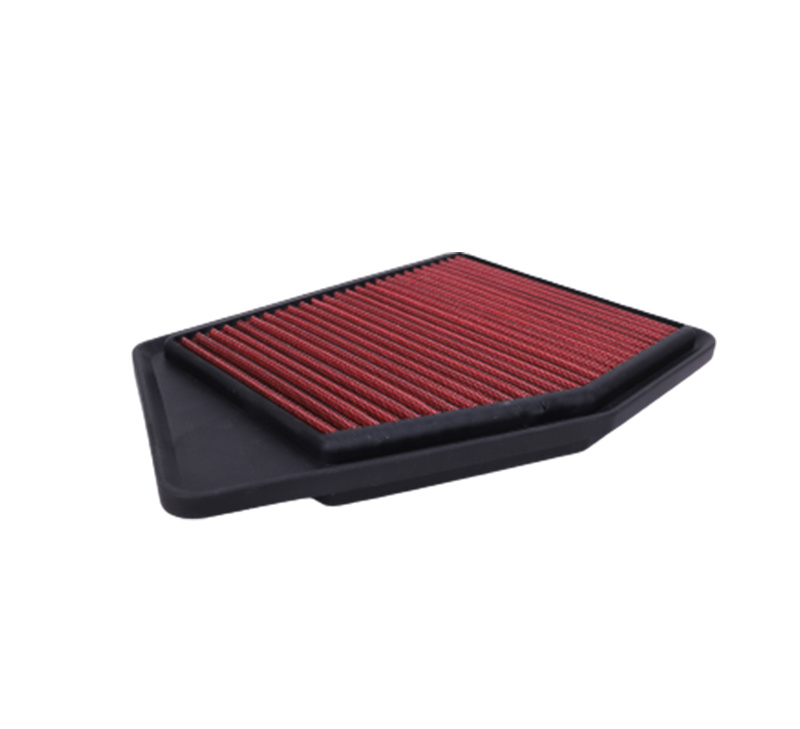
The intake system modification expert introduces that intake system noise is one of the main sources of noise in automobiles, and managing, controlling, and optimizing it is of great significance. Intake noise is caused by pressure fluctuations resulting from the periodic opening and closing of the intake valve and the high-speed airflow passing through the intake channel during the intake process. Depending on the generation mechanism, intake noise mainly includes the following types: periodic pressure pulsation noise, vortex noise, Helmholtz resonance noise of the cylinder, and acoustic column resonance noise of the intake pipe; the walls of the air filter and Helmholtz silencer are very thin, and when high-speed airflow passes through, they can easily be excited to cause radiation noise. The silencer volume, pipe cross-sectional area, and inlet position affect the acoustic performance of the intake system.
What are the noise reduction measures for the intake system? The research and comparison of treatment methods for gas flow noise and structural noise can be simple, and often we are not the main noise of the intake system. Here we discuss noise reduction measures for low-frequency noise as the main research issue.
1. Reasonably design the air filter. Generally speaking, the larger the volume of the silencer, the better the silencing effect, but this also requires us to consider factors such as layout development space, part weight, and production cost. In general, in this case, the volume of the air filter can reach more than three times the engine volume to achieve a good silencing effect.
2. Confirm the diameter and length of the inlet and outlet pipes of the air filter. Reducing the diameter of the inlet and outlet pipes of the air filter and increasing the expansion ratio is beneficial for reducing noise, but it will increase the resistance of the intake system and reduce the engine intake volume, affecting engine performance. The effective increase in the use of the air filter can timely follow up the length of the intake pipe according to national regulations. Increasing the length of the intake pipe, whether the air filter can effectively silence the frequency will shift to low frequency, so it is also very necessary for us to reasonably develop and plan the design of the lengths of the inlet and outlet pipes.
3. Reasonably design the silencing components of the system. Commonly used silencing design components include resonant cavities, 1/4 wavelength pipes, porous pipes, and woven pipes. Resonant cavities are generally aimed at low frequencies, 1/4 wavelength pipes can generally be used to remove mid-high frequency noise, and porous pipes and woven pipes are mainly used to remove noise with a wider frequency band.
The intake system consists of an air filter, air quality flow meter, intake pressure and sensors, throttle body, additional control gas valve, idle control valve, resonant cavity, power chamber, intake manifold, etc.
What is the structure of the intake system? Intake system modification experts will introduce it to you!
A complete intake system can be divided into two parts: the engine intake manifold system and the intake system. Air can enter a system - this system mainly includes the intake control valve, idle intake passage, corrugated hose, clean air pipe, 1/4 wavelength pipe, air passing through the filter, filter element, resonant cavity, intake pipe, etc.
What is the function of the intake system? Intake system modification experts will introduce it to you!
The main function of the intake system is to supply the engine with clean, dry, sufficient, and stable air to meet the requirements of the automobile engine, avoiding the entry of impurities and large particles of dust into the engine combustion chamber, which can cause abnormal wear of the engine. Another very important function of the intake system is to reduce noise. Intake noise not only affects external noise but also affects in-car noise, significantly impacting ride comfort. The design of the intake system can directly influence the power and noise environment quality of the engine, which relates to the overall ride comfort of the vehicle. An important aspect of the intake system design is the silencing components, which can reduce subsystem noise management, thereby enhancing the overall NVH performance of the vehicle.


RELATED NEWS
2023/08/08
2023/07/31
2023/07/19